|
|
Never since I started writing fishing
articles for this website in 2000 have I attempted such a
comprehensive, "leave no-stone unturned approach," as I have in
this piece.
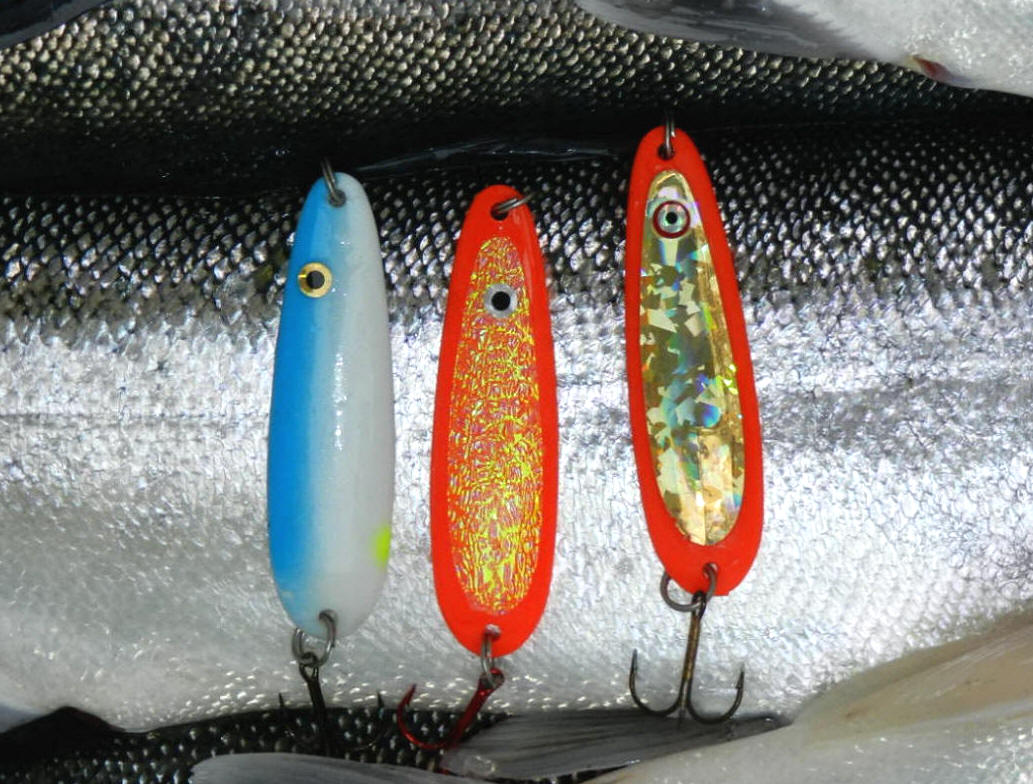
Why? ...the answer is easy. Being a vested interest that began when I introduced to the world, my Salmon Buster™ spoons in 2015. Now, it's entirely on my shoulders to make sure you're as successful, as humanly possible with what my tackle. Correct usage is always in the eye of the beholder, but I can share with you every bit of my knowledge going back to 1985 for targeting surface Steelhead, Rainbows, or in WI speak ..."bows." |
|
Foreword of Moving Forwards
2015 was a sharp poke in the eye for Lk. MI
anglers with an epic collapse of the Chinook/King Salmon
Fishery. Central Lk. MI ports on the MI side still had
some Kings show up. While ports like St. Joe and Leland
practically had none. Moving forward with the Lk. MI King
Fishery is a total unknown at the creation of this article and
videos.
Do know, the bright spot for Manistee, MI in 2015
was Steelhead fishing. In the following, I'll do my best
describe the nuts and bolts of how to target surface running
Steelhead and to a lesser extent, April shoreline Brown Trout.
Historical Reel Facts Steelhead are the Great Lakes the freshwater version of Tarpon when it comes to soaring out of the water. These fish are a huge success story in our Great Lakes Fishery. Possibly, dating back to Chicago's World Fair in the late 1800s when west coast Rainbows were first released into Lk. MI. Steelhead have colonized several fast flowing rivers and streams clean enough to support natural reproduction. For a Wikipedia's complete genealogy and extensive lifecycle of Rainbows (Oncorhynchus Mykiss) Click here Roots of this fishery dates back to the 1940s when departed Freshwater Hall of Fame fisherman, Capt. Bud Raskey would row his boat with customers aboard in Manistee Lk off the mouth of the Little Manistee River pulling old time spoons. The Little Manistee River is in Bud's backyard, maybe a 1/2 mile away from his home in Stronach, MI. In the mid 1980s this fishery started grabbing
ink in the fishing magazines and major newspapers. 20-30
fish trips in late May, June, into July were the norm
...not the exception. Back then, the fleet ran a long ways
offshore. Ready, Set, Go!
Surface trolling tactics for Steelhead are the ultimate EZ-est part of our Great Lakes Fishery. This is a pure no brainer. Downrigger speed-temp issues have left the building and are not part of this equation. This is all about big-time fun with an almost zero learning curve. The methods discussed here work equally as well with shoreline Brown Trout in April, with just a little less attention to the red and orange base colors of spoons. April Brown Trout on Lk. MI is not a clear water fishery. Best fishing for Browns is in the stained, but not muddy water. With the ever clearer water Great Lakes fishery nowadays, this is purely a finesse fishery for who use lighter line such as 15 lb. test. Line this light needs constant looking after. Always checking the leader section for nicks and line frays. Then, you're going to plenty of patience to vanquish their foe. Steelhead do not have the stamina of Salmon and wear themselves out on the many jumps, I'm sure you'll see. Only bad part, is the majority of these silver missle jumps are going to be a long ways from your boat and not up close and personal. Goat rope anglers using 25-30 lb. test attractor line are not going to have the same success. You can get by with 20# mono for a mainline. Then tipping down to 15 pound test on the leader to the weight. Targeting surface fish is 10% execution and 90% being in the right area. Like I said, trolling the surface is easy, finding the right place requires a little science help provided by NOAA CoastWatch's surface temperature charts. This will point you in the right direction, because surface temp breaks show up as gridlines. But it can hit and miss until you sort out the best area. Temp breaks can act like a fence. Herding fish along food rich vertical thermobars containing insects, baitfish and all kinds pollen. Not sure what the cause and effect is from land born pollen, but I'm sure it does have it's place in the food chain. Rod Setups
There's many ways to rig rods for surface trolling. Widest variance is the differing types weights that are usually on about 5' leader from the spoon. Weight is required to pull the spoon down. This is double true on a calm day when your fishing line is dry. Even metal spoons will not break the water's surface tension on a flat day. Hence they ride on the surface like a dead stick. Once mono gets wet, it's a lot easier and faster to let out a 100-125' of line with the water drag, wet line provides. Specific gravity of monofilament changes when it gets wet. This can effects how deep your lure/spoon will go. The water drag of wet mono is proven the second time you set the same line. First time out, you might have to help the line go out by pulling line off the spool by hand. After the mono is thoroughly wet, re-setting lines is a heck of a lot faster and easier as water drag takes over.
Big Boards vs. Little Boards aka the "Birds" One of the best things about fishing, is the loads of choices we have to achieve the same goal. One of the hardest things is not being bogged down with way too much info that cloud the simple task of catching a fish. Over thinking Both kinds of board have their advantages. Little boards, no matter what the brand are usually called, birds. This comes from the first successful inline, side-planer the, Yellow Bird. Birds might be a little quicker to set and provide a positive hookup. Here's where tradeoffs come in, because retrieving the smaller inline takes longer. Not to mention, the itself you either remove from the line by hand, or have it trip and flop around on the line while you're fighting a fish. With big boards, you go direct drive to the fish with no awkward chunk of plastic to contend with. Big boards are a lot faster to pull and reset lines. With the larger boards hook-sets tend not to be as positive, but tolerable if you pay a lot of attention to keeping your hooks ultra sharp. There's a lot of give-spongy feel to the main tag line that tows the board. One again meaning, ultra sticky-sharp hooks. So, never lazy-up by not paying a lot of attention to the first contact point you hope have with Mr. Fish. To me, one thing that's totally detestable with large board systems is the vaulted mast you see riding on many boats. This is fine, if you're in a small boat with no other alternatives. But larger boats with a walk/bow rail, need no such thing. I don't want to stare cross-eyed at a pole all day long stuck on the bow. Here's a link to a You Tube video showing how to use your bow-rail, to run a slick system from gone, but not forgotten, Capt. Jerry Lee shared with me on Lk. Erie during later 1980s: Remote planer board system Up until the intro of my Salmon Buster™ spoons in 2015, little boards had a leg-up, imparting a back and forth fish enticing jigging action. From what I learned in 2015, my patent pending spoons have their own erratic jiggle-wiggle, lifelike movement that performs on big boards just as well. It's easy to become complacent when you're fishing. Minutes melt into hours if you enjoy being on the Great Lakes as much as me. It's easy just to ride, but this is not the time to forget staying on top of how your spread is working. Remember, you're fishing in the top 10' of the water column and this is where the floatie stuff, like weeds can foul your offering. Rendering your baits all junked up useless to catch fish. Go thru, or reset your spread every so often to make sure you're not towing debris. Lead lengths should all be the same, or you'll be shuffling lines all day to eliminate lures staggered at various distances. Same length per side makes turns less prone to tangling lines. Water conditions dictate how long the leads should be. If it's a choppy 2' sea, 100' is more that enough. Flat water is another story that requires dropping the spoons back further to 125-150' will help counteract boat shy fish. Inlines, or birds are faster to set. These little planers have water resistance pulling out the line for you.
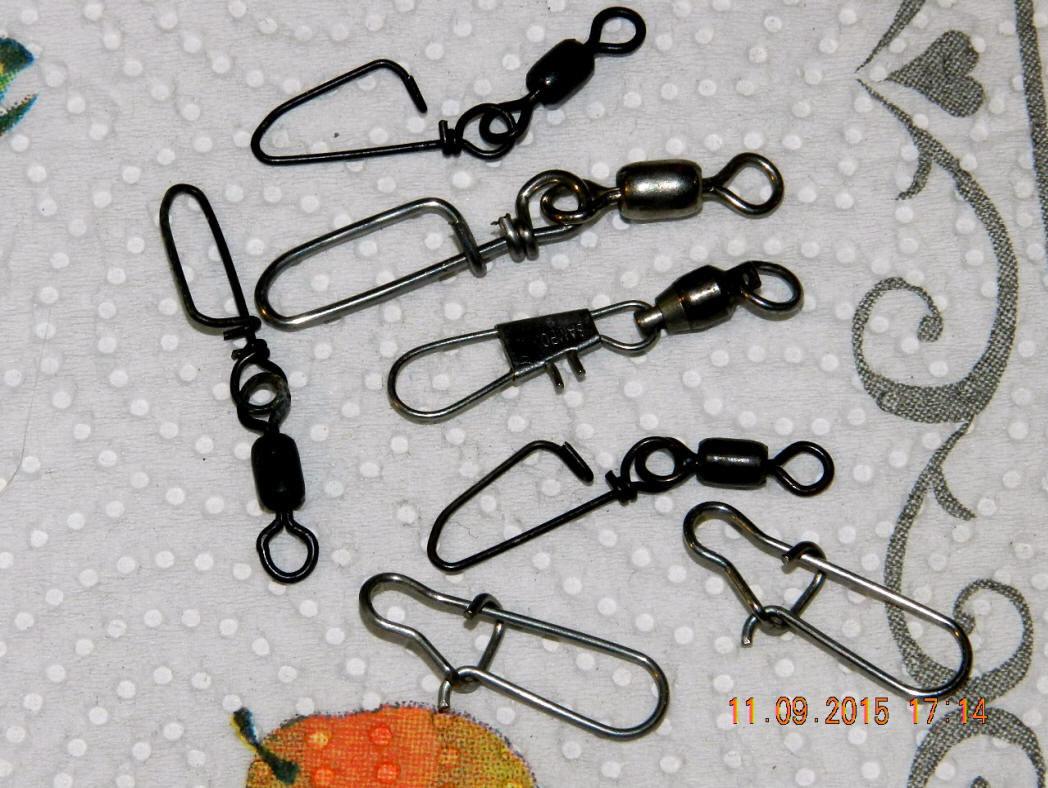
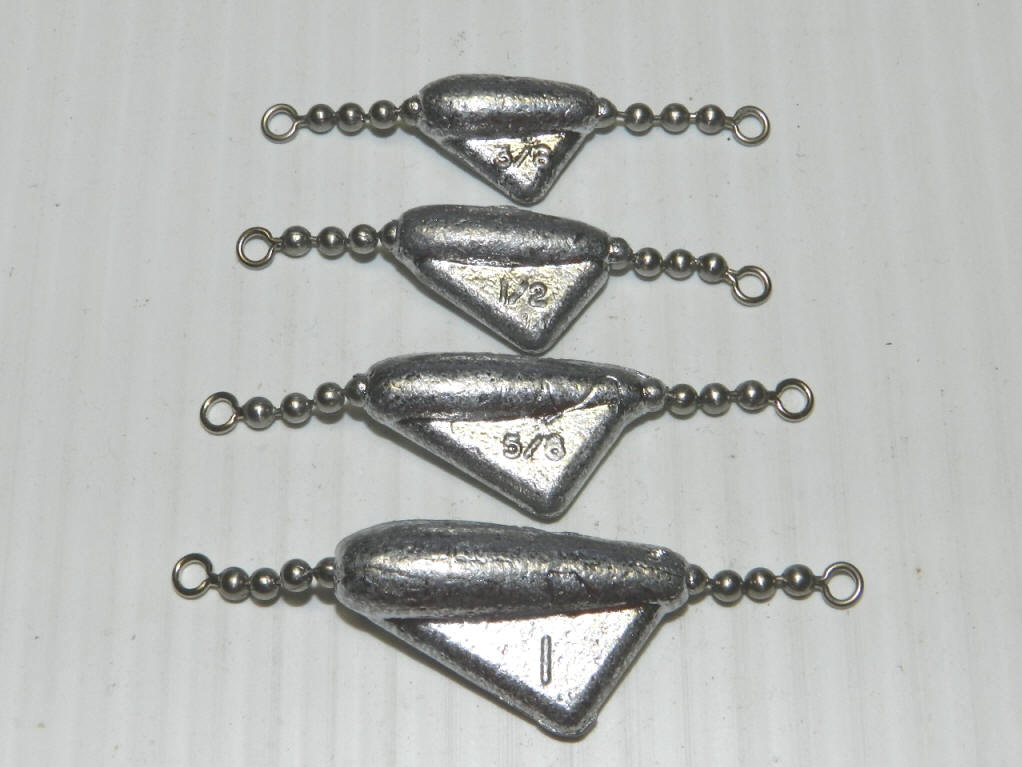
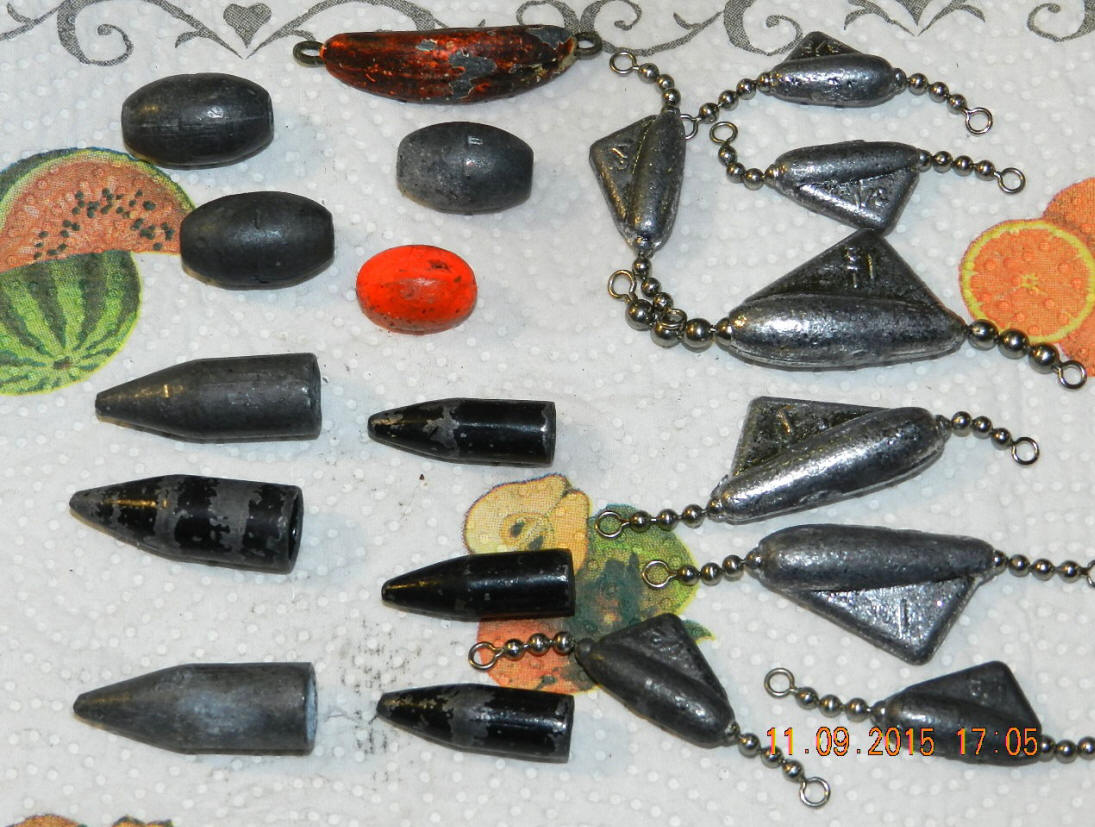
Line weights about 5' in front of your lure accomplish 2 things. First that's often overlooked is the reel fact it increases action of the spoon. Second they break the surface tension of the water. Third, they can run interference thru semi and floating debris. Most times it's the small things that make the biggest difference. By far, keel sinkers perform best. The keel acts as a rudder to 100% eliminate all line twisties from fouled lures. Twisties is line that wants to coil up into massive knots. Bead chain keel sinkers have a small fin to steady it from twirling. Best part is the each bead in the chain are all swivel points to keep Mr. Twisty from visiting. Plus, keel weights act like an automatic stopper for inline boards. Rubber core sinkers are a quick fix that don't last long, because the rubber deteriorates. Eggs sinkers do work, but you have to put a swivel and a bead. So do the bullet worm weights Bass fishermen use, but once again, this requires the use of a inline barrel swivel. Both of these methods do not stop/prevent the lines twisties. Possibly ruining a good 100' of line. At the very least, trolling the coils out with just a naked line being trolled thru the water for 10-15 minutes for water drag to pulls the kinks out. If you do get line twists, trolling just the line in the water will drag out the twists and save you yards and yards of line. Not to mention the time it takes to re-spool a reel. Without weight the on a calm day surface tension. Styles of lead weights include, egg, worm/bullet weights, banana, rubber core and my favorite, bead chain sinkers to do not require swivels. Swivels are a must. They prevent line twists when a small fish, or debris foul your lure. Setting Lines OK, now that you're armed with a pile of knowledge let's take it a step further and fine tune setting lines. If you're using the "big" boards and not inlines, it helps keep the boat speed on the hot side. Let's say, my desired troll speed is 2.5 mph, I'll bump up the speed to 3.5 mph to get lines in the water faster. It takes too much time to let out 100-125' of line, hook it to a release, then get it to side down the tag line that's towing the board if you're on the slow side. The faster your spread is set, the quicker you'll be taking hits. A word of note, I prefer the big boards. But this is a matter of personal preference, because I rather go direct to the fish and not have an inline board to deal with. Done it both ways and this depends on what you're most comfortable with. "Used to be," inline planers would produce more fish due to the little boards imparting more lure action as the skitter along. The game changer is my Lexan™ (plastic) Salmon Buster™ spoons that have their own erratic action built in. There's no metal spoon on this planet that darts, dives and changes direction like mine! If you're using the "big" boards, make sure to use 200# test planer board line and NOT the 150# test that comes standard on most planer board reels. Breaking a board off is big time grief. After a few seasons, reverse the planer board cord. This puts the used stuff on the bottom of the spool and brings newer unused line on top. Fluorocarbon, or Monofilament Line? In most cases this is going to be clear open-water trolling. Store the 25-30 pound test goat rope used for attractors and consider 15# test. You can get by with 20# for a mainline, then tip down to 15# leader from the keel sinkers I highly recommend to the spoon. Fluorocarbon can be a great choice for those believing it's invisible to the fish. I don't, but anything that adds confidence to your program go with your gut. Wind resistance is another factor that influences the line you use. The thicker the line diameter, the harder it is to get the line to slid down the tag line of larger boards. Wind effects inlines too, but to a lesser extent. A to Zs on Rigging Terminal Tackle Species Speeds Hooking Up Attachment Hardware Debugging Mythical Status
|